The Backup Telly Plan: Why a Dusty Aerial Still Wins on the Nights Streaming Doesn't
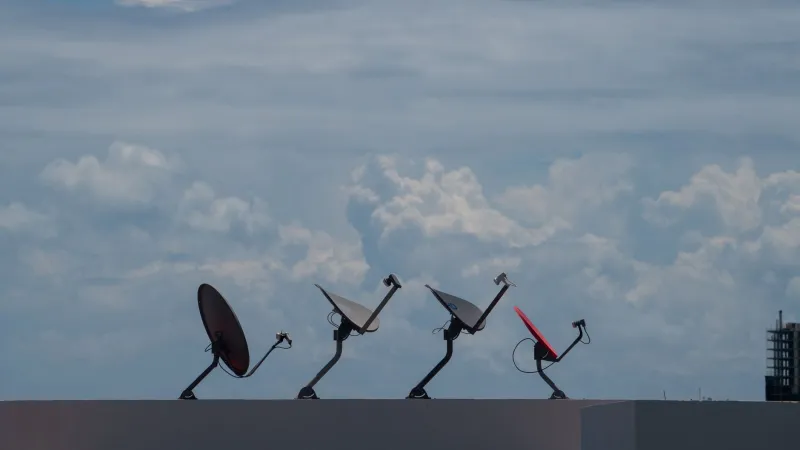
There's a certain type of UK household that quietly unplugged the aerial years ago, taped over the wall socket, and never looked back. Fair enough. Streaming is convenient, the apps are decent, and nobody misses the days of retuning a telly in the rain. But every so often — usually on a Saturday night, usually during something important — the broadband hiccups, and suddenly that taped-over socket starts looking less like clutter and more like a life raft.
This isn't a rant against streaming. It's a practical look at what a plain old aerial or satellite dish still does better in 2026, and why a bit of free telly backup is one of the more sensible things a UK household can sort out before the winter.
The bit where the internet goes down and everyone stares at the router
Broadband in the UK is generally fine, but "generally" is doing a lot of heavy lifting. A line fault, a local outage, a router that decides to have a moment — any of these can take your evening's viewing with it. When that happens, a streamed channel is gone. A Freeview channel over the aerial carries on as if nothing happened, because it never needed the internet in the first place.
That's the core of the argument. Freeview and Freesat are broadcast. The signal arrives through the air or from a dish, not through your ISP. If the broadband dies, the telly keeps working. For households with kids, elderly relatives, or anyone who just wants the news on in the background, that reliability is worth more than it sounds on paper.
Latency: why next door cheers before your stream does
Here's a small thing that drives people mad. Watch a big match on a streamed app and you'll often hear a goal celebrated on the street a good twenty to forty seconds before you see it. Those few seconds are latency — the time it takes for the picture to travel to you. Broadcast telly doesn't have that problem in the same way. The signal is effectively live.
For live sport, breaking news, or anything where being a minute behind matters, an aerial feed is simply tighter. It's not a dramatic difference, but once you've had a goal spoiled by a neighbour's cheer, you notice it every single time.
Regional news and the local stuff that apps forget
Streaming services are built for scale, and scale means you get a national feed. Your regional news, the local bulletin, the bit where they talk about a road closure two towns over — that's often harder to find on an app, and sometimes not there at all. Freeview and Freesat put your regional variant exactly where it should be, on the channel number you'd expect.
If you're in a part of the UK where local coverage matters — and that's most of us — this is one of those quiet advantages that's easy to miss until it's gone.
Recording: the unglamorous feature that still earns its keep
Streaming has catch-up, and catch-up is great. But catch-up only covers what the broadcaster decided to put up, for as long as they decided to keep it. A basic Freeview or Freesat recorder — even a cheap one — lets you keep things on your own terms, skip the ads, and not worry about whether a show is about to vanish from a library.
For anyone who records the soaps, saves documentaries, or timeshifts the news, a recorder attached to an aerial is still the least faffy way to do it. No account, no subscription, no app update breaking your saved list.
The true cost, added up honestly
Let's be neutral about money. A working aerial setup isn't free if your aerial is knackered — a repair or replacement can cost a couple of hundred pounds depending on where you are and how awkward the roof is. A satellite dish installation is similar. That's real money, and it's fair to weigh it up.
But once it's done, the ongoing cost is zero. No monthly fee, no price rise letter, no bundle to renegotiate. A Freeview Play or Freesat box is a one-off purchase. Compare that to even a modest streaming stack, and the aerial pays for itself over a few years — if you haven't already got one quietly working on the roof.
So what's the sensible move in 2026?
Nobody's suggesting you bin the apps. Streaming is where most of the good telly lives now, and pretending otherwise would be daft. But a working aerial or dish is the cheapest insurance policy in the house. Check whether yours still works — plug in a cheap Freeview box and see. If it does, brilliant. If it doesn't, a repair might be worth more than another subscription you'll forget to cancel.
Think of it as the backup telly plan. The apps do the heavy lifting most nights. The aerial sits there, quietly, ready for the evening the internet doesn't fancy cooperating. That's not nostalgia. That's just good household telly management.