The Telly That Tattles: A Room-by-Room Privacy Audit for UK Smart TVs
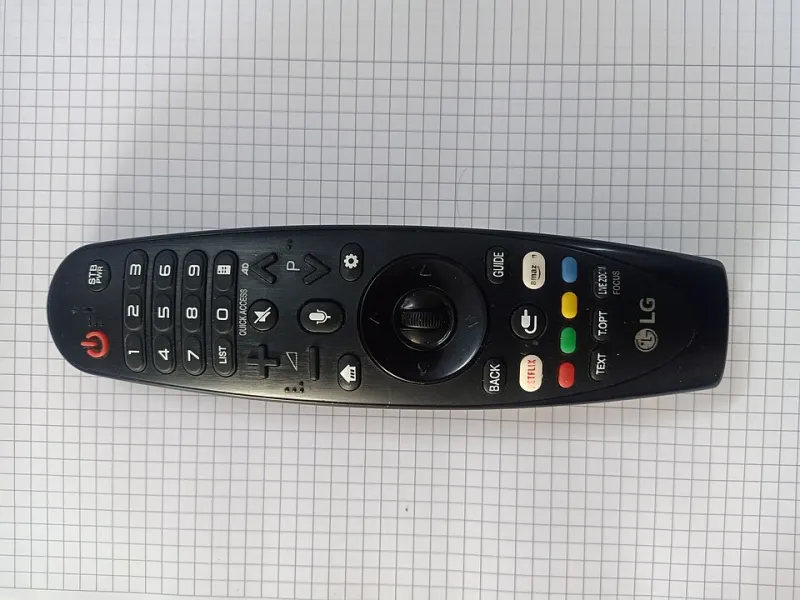
Photo: Suyash Dwivedi, CC BY-SA 4.0, via Wikimedia Commons
Your telly has opinions about you. Not in a HAL 9000 sort of way — no red eye glowing above the soundbar — but quietly, in the background, it's noting what you watch, when you stop watching it, and which adverts you sit through. Most of us clicked "Agree" on a screen we barely read while the kettle boiled, and then never thought about it again.
That's not a reason to panic. It is a reason to spend twenty minutes with a remote and a cup of tea. Here's how to work out what your set is up to, room by room, and dial back what you can.
What's actually being hoovered up
Four things do most of the work, and it helps to know them by name before you start poking around menus.
Automatic content recognition (ACR). This is the big one. Your TV takes a fingerprint of what's on screen — sometimes several times a second — and matches it against a database. It's how a set knows you're watching The Chase on ITV1 rather than a stream, and it's the backbone of most "personalised recommendations" and ad targeting. On Samsung sets it hides under Viewing Information Services; on LG it's called Live Plus; other brands dress it up differently.
Advertising IDs. A resettable identifier tied to your set. In theory you can reset it; in practice it's buried three menus deep and sometimes resets to the same value after a firmware update.
Voice assistants. If your remote has a microphone, some audio gets processed in the cloud. Wake-word detection usually happens on the device, but anything after the wake word doesn't.
Account linking. Netflix, BBC iPlayer, ITVX, Channel 4, NOW, plus a manufacturer account with your email and postcode. Individually each is fairly tame. Joined together, they're a reasonably detailed picture of a household.
Start with the screens, not the rooms
A literal room-by-room walk is still the right instinct, because the set you forget about is usually the nosiest one.
The main living room telly is the obvious one. Go into Settings, find Privacy (it'll be called Terms & Privacy, Privacy & Terms, or similar), and read the list slowly. You're looking for three things: ACR, personalised advertising, and voice.
The bedroom set is the one nobody audits. It's often a hand-me-down, still signed into a former flatmate's Samsung account, still running default settings from 2019. Check it.
The kitchen or spare-room telly is frequently a cheap supermarket brand with the least transparent privacy menu of the lot. Not sinister — just poorly documented. Expect vague labels.
The boxes hanging off them. A Fire TV Stick, Roku, Apple TV or Sky box has its own privacy settings, entirely separate from the telly's. Turning off ACR on the TV does nothing about what the stick is doing.
The switches that actually do something
Turn ACR off. You lose some tailored recommendations; you don't lose channels, apps or picture quality. On most sets the warning screen implies the telly will collapse. It won't.
Reset and disable the advertising ID. You'll still see adverts — nobody is promising otherwise — but they'll be less eerily relevant. This is the single most useful five-minute job on a Fire TV.
Decide about voice properly. If you never use it, mute the mic at the hardware switch and stop worrying. If you do use it, at least know that the remote is listening for the wake word and that cloud recordings may be retained for a period. Both are fine; both are worth knowing.
Prune linked accounts. Do you need the manufacturer account at all? Some sets let you skip it, with nagging. Sign out of apps on sets you've sold or moved to a spare room.
Switch off "instant on" or "fast start". It keeps the set partly awake and network-connected so it boots in two seconds instead of eight. That's the trade: a few seconds of your life for a chattier telly.
Keep firmware updates on. This feels counterintuitive when you're in a privacy mood, but an unpatched smart TV is a security problem, not just a data one. Take the updates; turn off the tracking.
Set up separate profiles. Especially for children's profiles, which often collect and share differently. A PIN on the adult profile stops a curious eight-year-old browsing your watch history too.
What you genuinely can't fix
The apps themselves — iPlayer, ITVX, Netflix, and the rest — collect their own data regardless of what your telly's privacy menu says. Your broadband provider sees connection metadata. And the wider ad ecosystem can still do a certain amount of frequency capping using your IP address. If your goal is "nobody knows anything about me", a smart TV isn't the tool. If your goal is "fewer companies building a profile of my living room", an audit gets you most of the way.
Under UK GDPR, consent should be freely given and refusable — and the ICO has been fairly clear that bundled consent screens are on thin ice. That said, the practical reality is that refusing everything on some sets disables features or leaves you prodding at nag screens. You're allowed to be pragmatic about this.
Waffle, translated
"To improve your experience" — usually means ad targeting. "Anonymous identifiers" — often means pseudonymous, which is a different thing. "Personalised recommendations" — frequently means ACR. "We don't sell your data" — often means they sell access to audiences rather than handing over a spreadsheet, which is a distinction the average viewer won't feel.
The test is simple: can I switch it off, does switching it off break anything I care about, and was it on by default?
A sensible baseline for a UK household
If you do nothing else: ACR off, ad ID reset, voice mic muted if unused, accounts pruned, instant-on off. That's the 80% solution and it takes about twenty minutes on a modern set, longer on an older one with a remote made of sandpaper.
Then diarise it. Firmware updates have a habit of quietly restoring defaults, and a privacy audit you did in spring isn't worth much by winter. Six-monthly, alongside the smoke alarm test, is about right.
You don't need to make your telly dumb. You just need to stop it being quite so chatty.